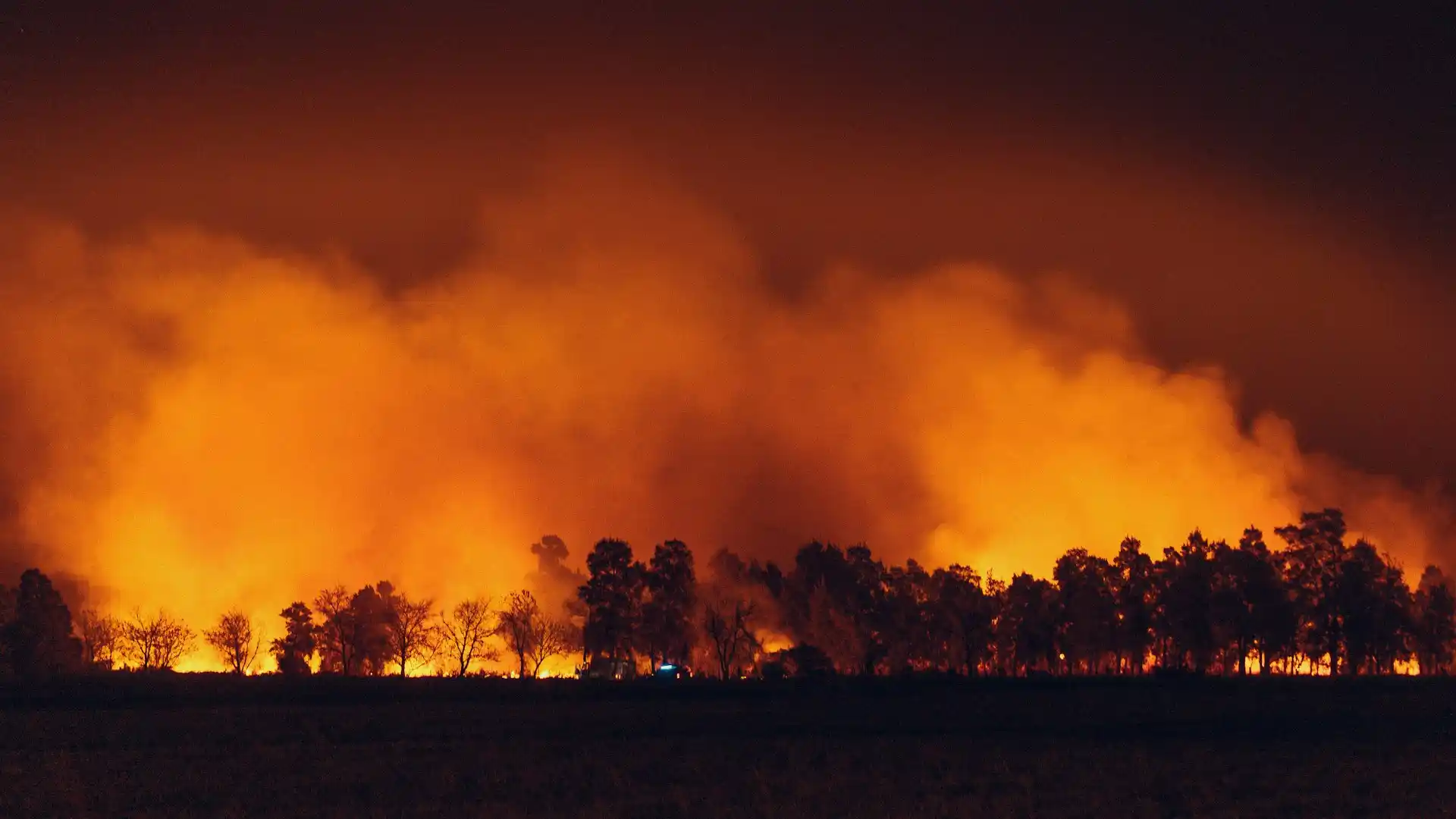
Climate Change Keeps Wildfires Burning Through the Night
June 15, 2026
February 11, 2026
February 11, 2026
February 5, 2026

Norman Leroy, a climate and environmental journalist covering climate policy, renewable energy, environmental science, and the global impact of climate change.
Wildfires used to die down and even stop at night with cooler temperatures and increased humidity. But that’s happening less often.
A study says climate change is making burning weather more around the clock in North America because night is becoming warmer and drier.
The number of hours in North America when the weather is favorable for wildfires is 36% higher than 50 years ago.
Humidity at night “doesn’t rebound” from its daytime dryness like it used to, according to researchers.
Since 1975, summers in the contiguous U.S. have seen nighttime lowest temperatures warm by 2.6 degrees Fahrenheit, faster than daytime highs.
Warmer nights reduce plant recovery and maintain lower humidity levels, making nighttime fires harder to control.
Why This News Matters:
Wildfires used to give firefighters a break at night. Cooler air and higher humidity would slow things down, sometimes even stop the flames. That’s not really happening anymore. Nights are staying warmer and drier, which means fires can keep burning—and even spreading—while people expect them to calm down. That makes them more dangerous, less predictable, and a lot harder to control.
Increase in Fire-Prone Hours and Longer Fire Seasons
The study discovered that the number of fire-prone days each year has increased by 44%, adding approximately 26 days to the fire season.
California, for example, now has 550 more potential burning hours than in the mid-1970s.
Parts of southwestern New Mexico and central Arizona are experiencing up to 2,000 additional hours each year when the weather is conducive to blazing fires.
The study looked at times when circumstances were favorable for fire, but this did not imply that fires happened at all times.
Over the last few decades, the number of hours and days with ideal wildfire conditions in North America has increased dramatically.
Real-World Examples of Nighttime Fire Behavior
Fires that surge at night are tougher to fight and included the Lahaina, Hawaii fire in 2023, the Jasper fire in Alberta in 2024 and the Los Angeles fires in 2025.
Maui’s fire ignited at 12:22 a.m.
These fires highlight how wildfire behavior is changing, with flames no longer slowing down after sunset as they once did.
Using satellite data and atmospheric modeling, scientists looked at almost 9,000 fires in North America between 2017 and 2023.
The results show that fires are harder to put out at night because they are more active.
Causes: Hotter, Drier Conditions Driven by Climate Change
The change is mostly due to climate change caused by people.
In simple terms, the planet isn’t cooling off the way it used to once the sun goes down. Heat-trapping gases from burning coal, oil and natural gas are holding onto warmth, so nights stay unusually warm instead of giving the land a chance to cool and recover.
That lack of cooling has a ripple effect. Normally, cooler nights bring moisture back into the air and help plants regain some of the water they lost during the day. But now, with nights staying warmer and drier, that recovery isn’t really happening.
Drought is also making everything even more fragile. The air is so dry that it takes water from the ground, trees, and plants. This makes trees weaker and easier to set on fire. Places that used to be strong and full of life can start to act more like dry fuel.
Put together, these changes mean fires don’t just start more easily — they keep going. Wildfires can stay active all day and night without that natural nighttime slowdown. This makes them more dangerous, harder to predict, and much harder for firefighters to deal with.
What to Watch Next:
Watch how fire seasons keep changing. If nights keep getting warmer, fire seasons will probably last longer and fires will probably be more intense and not "rest." This could make firefighters more stressed, make neighborhoods less safe, and change how we get ready for and deal with wildfires.
Sources:
1. AP News
2. CTV News

Norman Leroy, a climate and environmental journalist covering climate policy, renewable energy, environmental science, and the global impact of climate change.
June 15, 2026
February 11, 2026
February 11, 2026
February 5, 2026