Trump’s Texas Trip Amid Heated GOP Primary
July 6, 2026
June 10, 2026
May 5, 2026
March 26, 2026

Gilbert Vernon, a political correspondent and author, covering the U.S. Supreme Court, federal agencies, and government policy.
The Candidates and the Battle for Texas Senate
In the Texas Republican primary election, there are three strong candidates vying for the seat, all of whom have something special to offer and connections to former President Trump. In this election, Senator John Cornyn, who is trying to secure his fifth term, is facing challenges from within his own party and from his opponents. Attorney General Ken Paxton is surrounded by controversy and legal issues, while Wesley Hunt, a young and ambitious congressman from Houston, Texas, is trying to win the election by proving his loyalty to former President Trump.
However, Cornyn’s position is also affected by his relationship with Trump and his position on important issues. Although Cornyn has not managed to win Trump’s endorsement, he is considered to be the strongest contender for the general election by party leaders. Nevertheless, his opponents have tried to capitalize on his weaknesses, particularly considering the controversies surrounding Paxton. Paxton has faced impeachment proceedings and accusations of marital infidelity; hence, he has not managed to retain support from his base. On the other hand, Hunt has managed to attract attention by embracing Trump, as evidenced by his early endorsement of Trump during the 2024 campaign cycle.
The primary race will be decided on Tuesday, with a runoff scheduled for May 26 if no candidate secures more than 50% of the vote. The competition has seen an enormous infusion of political spending, with campaign groups and the candidates themselves pouring over $63 million into the race since last fall. A significant portion of this spending has been aimed at undermining each other's campaigns, with recent ads targeting Hunt and defending Cornyn’s record.
Trump’s Role and the Political Stakes
While Trump himself has continued to profess his neutrality, actions speak louder than words, and Trump’s actions speak volumes about his interest in the race. Just last week, he indicated that he was considering getting involved in the Texas primary, but later went back on that statement to reaffirm his neutrality. However, all three of the candidates have been working hard to align themselves with the Trump brand. Cornyn, while the relationship between the two has had moments of tension, has run ads touting his support of Trump’s agenda. Both Paxton and Hunt, meanwhile, have run ads that prominently feature their support of Trump.
During a recent interview, Trump expressed a degree of admiration for all three candidates, stating, “I like all three of them, actually. Those are the toughest races. They’ve all supported me. They’re all good. You’re supposed to pick one, so we’ll see what happens. But I support all three.” This ambiguous stance underscores the delicate balancing act Trump is performing—trying to influence the race without alienating any of the contenders or the broader GOP electorate.
The significance of this primary extends beyond Texas. GOP leaders and campaign strategists see the Texas Senate seat as vital for the party’s hopes of maintaining control of the Senate. Many argue that endorsing Cornyn would be the most pragmatic choice, given his experience and fundraising strength, especially in a race that could hinge on narrow margins. Senate Majority Leader John Thune and Senator Tim Scott, chair of the National Republican Senatorial Committee, have publicly encouraged Trump to back Cornyn, emphasizing that a victory for Paxton could threaten the party’s hold on the seat and lead to costly general election battles.
Broader Political Context and Other Contests
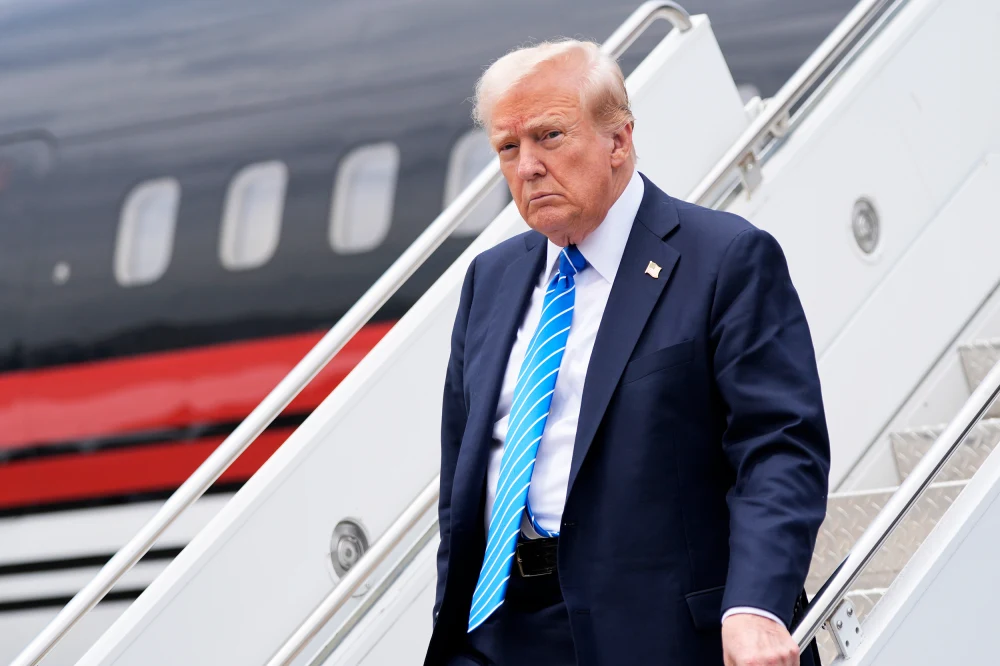
Trump’s trip to Texas is not limited to the Senate primary. The president has also extended his influence to other key races across the state. In the Houston area, he has endorsed Rep. Tony Gonzales, who is facing a primary challenge amid controversy involving allegations of an affair with a deceased staffer. Gonzales, who has refused to step down, maintains that all facts will eventually come to light and dismisses the allegations as incomplete.
Moreover, the Trump campaign has been seen to be backing Mayra Flores, who is seeking to reclaim her former position in the 34th congressional district of Texas, where she is competing against Eric Flores, who is also a Trump-backed candidate. This district was recently redrawn to favor the Republican party, and it is one of the key battlegrounds that will be crucial in the forthcoming elections. Trump’s activities in these races demonstrate the overall strategy he is employing to mobilize Republican voters and increase his grip on the party ahead of the 2024 elections.
The primary contests that are going on in Texas represent the overall ideological and strategic differences that have been witnessed within the Republican party. Trump, while backing the candidates who share his vision, is also seeking the support of the party’s traditional conservatives like Cornyn. The overall outcome of the primary contests will be crucial not just for the Republican party but will also define the future of the party as it prepares to face the forthcoming presidential race.
The presence of Trump in Texas highlights the critical nature of the primaries in the state. This is because there are currently three major candidates who are fighting for the senate seat, among other key races that are drawing significant attention. Therefore, the Texas primaries will be a major milestone in the Republican Party. The engagement of Trump in the process is a clear indication that he would like to influence the outcome of the process so that his candidates can win. This way, he can shape the course of the Republican Party in the coming year. Therefore, as people prepare to vote in the coming week, the outcome will be a major milestone.

Gilbert Vernon, a political correspondent and author, covering the U.S. Supreme Court, federal agencies, and government policy.
July 6, 2026
June 10, 2026
May 5, 2026
March 26, 2026