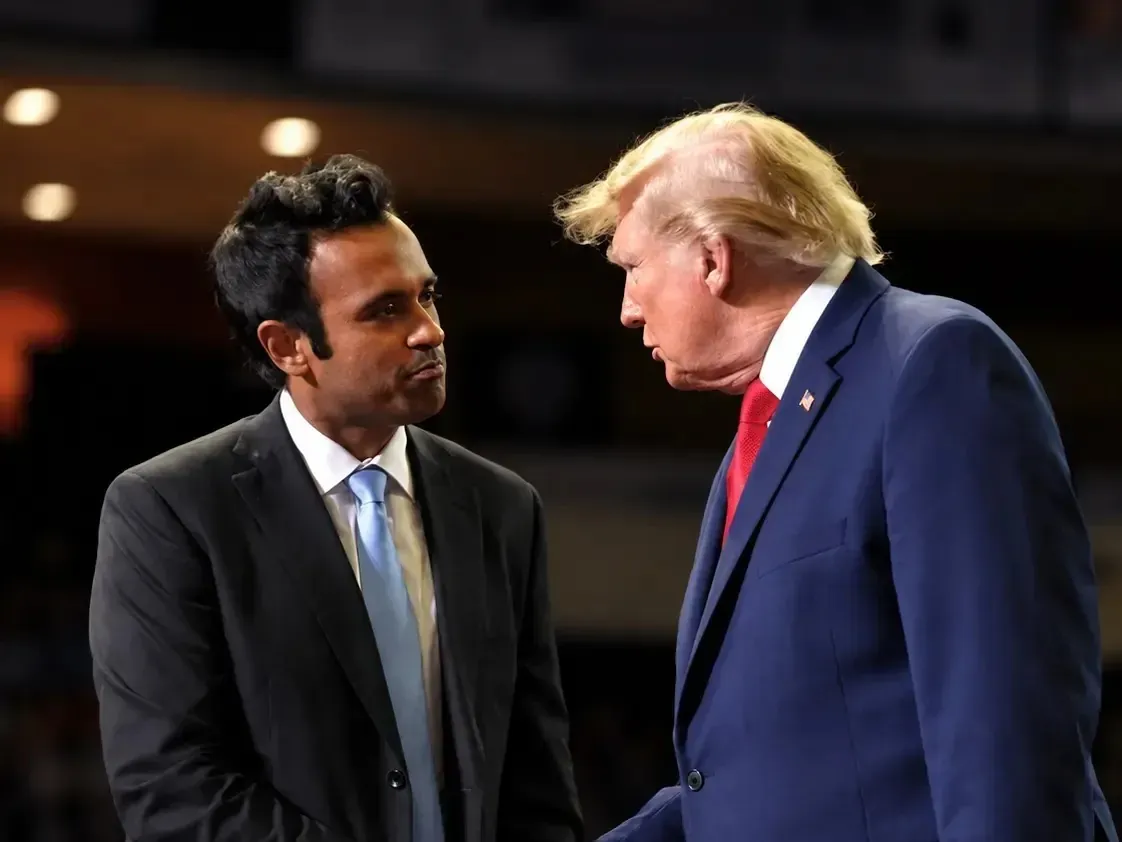
A controversial campaign advertisement from Republican Ohio gubernatorial candidate Vivek Ramaswamy has exposed divisions among prominent Republicans, drawing criticism from outgoing Governor Mike DeWine while receiving support from President Donald Trump and Vice President JD Vance. The 60-second ad features Amy Acton, the Democratic gubernatorial candidate and former Ohio public health director, through comments from her estranged mother, Donna Arthur, who calls her daughter a liar and questions her suitability for office.
Acton has publicly described experiencing abuse and homelessness during childhood. Her campaign says she and her brother were removed from their mother's custody when Acton was 12, after her stepfather was charged with sexually abusing her. Court records cited in news reports indicate that the stepfather was indicted, failed to appear for a court hearing and later died before the case went to trial.
Ramaswamy's campaign has taken responsibility for the advertisement and announced plans to spend $4 million airing it online and on television. DeWine called the ad “deeply, deeply troubling” and urged the campaign to remove it, although he maintained his endorsement of Ramaswamy. Trump, by contrast, defended the advertisement and criticized DeWine for speaking out against it.
The dispute has placed campaign tactics and the use of candidates' personal and family histories at the center of Ohio's gubernatorial contest. Republicans have publicly disagreed over whether the advertisement is an acceptable campaign tactic, while Democrats have also criticized its focus on Acton's childhood and family circumstances.
Ramaswamy Ad Uses Family Dispute to Challenge Amy Acton's Credibility
The advertisement centers on Donna Arthur, Acton's estranged birth mother, who criticizes her daughter and portrays her as dishonest. The video began circulating online before Ramaswamy's campaign confirmed its involvement and announced its plan to spend $4 million promoting it.
The campaign has argued that voters should be able to hear Arthur's claims. Acton and her supporters, however, say the advertisement uses a painful family history to undermine her candidacy without providing essential context about her childhood.
Acton has spoken publicly about experiencing abuse and homelessness while growing up. Her campaign has said she and her brother were removed from their mother's custody when Acton was 12, after her stepfather was arrested and charged in connection with allegations of rape. According to reporting by the Associated Press and other news organizations, the stepfather pleaded not guilty, was indicted, failed to appear at a court hearing and remained a fugitive before his death. The case did not proceed to trial.
Acton has accused Ramaswamy of using her childhood trauma for political advantage and said she would not normalize the tactic. Her campaign also released a statement from her brother, Philip Stearns, who supported her account of their childhood and criticized the advertisement.
The controversy has consequently extended beyond the candidates' competing political messages. It has raised questions about how personal histories should be presented in election advertising, what context voters need to assess claims and where campaigns should draw the line when discussing an opponent's family.
Mike DeWine Breaks With His Endorsed Successor Over the Ad
DeWine's criticism attracted particular attention because he has endorsed Ramaswamy to succeed him as Ohio governor. Speaking to reporters at the Ohio Statehouse, the outgoing Republican governor described the advertisement as “deeply, deeply troubling” and said it was wrong to run it. He urged the campaign to take the video down.
Despite his objection, DeWine said he would continue supporting Ramaswamy rather than withdraw his endorsement. His position placed him at odds with the candidate he has backed in the gubernatorial race.
Other Ohio Republicans have also expressed reservations. U.S. Senator Jon Husted said he would not have run the advertisement, while Ohio Secretary of State Frank LaRose similarly indicated that he would not have used such a campaign tactic. Other Republican figures have also criticized the ad, although some conservative commentators and activists have defended it.
The disagreement has highlighted tensions within the Ohio Republican Party during the closing stretch of the campaign. Critics have argued that the controversy risks diverting attention from policy debates and creating difficulties for other Republican candidates on the ballot. Supporters have defended aggressive campaign messaging as part of political competition.
DeWine's response is particularly notable because he has maintained his endorsement while publicly condemning the advertisement. His position illustrates how support for a candidate can coexist with disagreement over specific campaign decisions.
Trump and JD Vance Defend the Advertisement
Trump publicly defended Ramaswamy's advertisement and criticized DeWine for urging the campaign to remove it. In a social media post, Trump accused DeWine of disloyalty to the Republican Party and said Ramaswamy should continue airing the ad. His intervention brought the dispute into a wider debate about campaign strategy and the influence of the president's political style within the Republican Party.
Vance also pushed back against Republican criticism. During a campaign appearance in Ohio, the vice president said he was frustrated by Republicans complaining about the advertisement and argued that they were giving too much attention to the controversy compared with their objections to Democratic policies.
Their support contrasts with the criticism from DeWine, Husted and LaRose, demonstrating that the disagreement does not fall neatly along party lines. Republican figures have differed over whether the advertisement is an effective way to communicate political criticism or whether its focus on a candidate's family history crosses a boundary.
Some Republican-aligned commentators have defended the ad as a way to energize supporters and attract attention. Critics have warned that a highly personal attack could alienate some voters and distract from issues such as the economy, public services and public safety.
The Washington Post has examined the controversy as a broader test of whether the combative style associated with Trump translates effectively to other candidates. Although Ramaswamy's campaign has said its research found the advertisement effective with focus groups, its ultimate effect on voters remains uncertain.
Electoral Impact Remains Unclear as Ohio Campaign Continues
The controversy comes during the final weeks of Ohio's gubernatorial race. Ramaswamy, a biotechnology entrepreneur and former presidential candidate, is seeking his first elected office. Acton previously served as Ohio's public health director and became widely known for her role during the COVID-19 pandemic.
The advertisement has introduced a highly personal dispute into the candidates' closing campaign messages. Ramaswamy's team has said the ad performed well in focus-group testing, while critics argue that the backlash could affect perceptions of his campaign and create challenges for other Republican candidates.
The immediate electoral consequences are not yet established. Voters may respond to the advertisement's claims, the context surrounding Acton's childhood, the conduct of the campaign that produced it or the candidates' wider records and policy proposals. The available reporting does not establish that the controversy will determine the outcome of the race.
The gubernatorial contest is taking place alongside a closely watched U.S. Senate race between Republican Jon Husted and Democrat Sherrod Brown. The broader electoral setting means disagreements over campaign tactics may have implications beyond the two candidates for governor, particularly as party leaders seek to maintain a unified message during the closing days of the campaign.
Ramaswamy's planned $4 million advertising expenditure ensures that the campaign intends to give the spot substantial visibility. However, visibility alone does not establish whether the advertisement will help or hurt the candidate electorally.
For now, the clearest outcome has been a public disagreement over the boundaries of political advertising. DeWine has criticized the ad while retaining his endorsement, Trump and Vance have defended the campaign's approach, and other Republicans have voiced differing views. How Ohio voters respond will become clearer as the election approaches.
Sources: The Washington Post · The Guardian · CNN